Restore absolute structural integrity to your self-recovery rigging, eliminate dangerous strand fraying, and maximize your pulling safety margin with premium UTV winch rope replacements and heavy-duty steel cables. The recovery line is the most highly stressed component of your entire winch system, subjected to massive tensile loads, sharp rock abrasion, and severe environmental breakdown. Reusing a kinked steel line or an unraveled synthetic rope dramatically increases the risk of a snap on the trail, which can damage your side-by-side or cause severe injury. At CG ATV & UTV Parts Shop, we stock high-strength braided UHMWPE synthetic lines, aircraft-grade galvanized steel wire ropes, and rugged line extensions built to handle intense off-road tension.

Our domestic supply chain carefully manages and pulls from our live warehouse stock, ensuring immediate order verification and fast daily shipping directly to your garage workshop. These replacement lines are fitted with heavy-duty thimbles, protective terminal sleeves, and forged hooks to slip seamlessly onto your winch drum. Upgrading to a fresh, high-tensile recovery line ensures you can winch out of the deepest bogs with absolute peace of mind.
Showing the single result

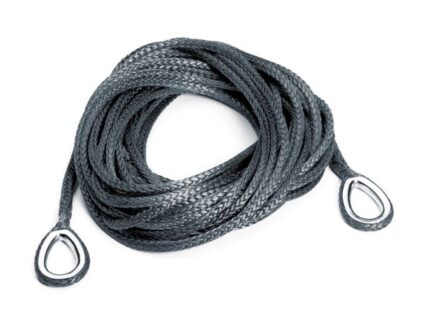
Warn 50′ Synthetic Rope Extension

Original price was: $204.39.Current price is: $183.95.
Genuine Warn winches & recovery component. In stock, ships 1–3 days from USA. Shop all Winches & Recovery at CG ATV & UTV Parts Shop.

Line Architecture: UHMWPE Tensile Capacity, Wire Core Kinking, and Abrasion Shielding

Replacing a compromised UTV winch rope with a high-capacity variant is critical to sustaining a reliable emergency recovery platform. Modern synthetic lines are constructed from 12-strand Ultra-High-Molecular-Weight Polyethylene (UHMWPE), which provides a higher strength-to-weight ratio than steel cable while remaining so light it floats. The primary safety advantage of synthetic fiber is its low mass; if a break occurs, the line drops harmlessly rather than whipping with deadly kinetic energy. Conversely, classic galvanized steel core wire offers unmatched shear and crush resistance when dragged heavily over sharp, abrasive limestone ledges. However, steel lines are prone to permanent kinking and burring, requiring immediate replacement once individual wire strands begin to fracture.

To maximize service life, synthetic ropes incorporate a tightly woven sliding nylon sleeve on the first ten feet to act as an adjustable shield against trail abrasion.

Direct Live Inventory Sourcing Directory

Coordinate corresponding chassis, steering, and powertrain upgrades directly from our available stock:

Installation Protocols, Spooling Tensions, and Core Maintenance

When installing a replacement winch line, first pull the clutch lever into freespool and completely remove the old damaged line from the drum spindle. Inspect the internal anchor point—either a small set-screw lock or a wedge pocket—and clean out any embedded grit or rust scale. For synthetic lines, verify that your fairlead is a smooth, unmarred aluminum hawse style; do not route synthetic line through a roller fairlead previously used with steel wire, as the metal burrs will shred the fiber strands instantly. Insert the terminal end of the new line into the drum anchor point and tighten the set-screw securely. To wind the line correctly, helper assistance is required to keep the line under tight, uniform tension. Wrap the first five base layers neatly edge-to-edge across the drum by hand to prevent subsequent wraps from burying themselves deep into the core under a heavy pull. Keep the vehicle engine idling to maintain voltage stability. Once the spooling is complete, install a rubber hook stopper block onto the end of the line to prevent over-retrieval damage to your fairlead casting. For raw chemical testing and synthetic material metrics, reference guidelines governed by the SAE International Cable Material Standards.

Winch Cable & Rope FAQ

It is highly discouraged unless the rollers are completely brand new and unmarred. If steel cable was previously run through the roller fairlead, it will have left behind sharp metal burrs and scratches. These microscopic teeth will slice and fray synthetic fiber strands under load, causing rapid line failure. Upgrading to a smooth aluminum hawse fairlead is standard practice for synthetic lines.
You must replace a steel cable immediately if you observe any sharp burrs (broken individual wire strands), permanent crushing or flattening of the rope profile, heavy rust corrosion that weakens the steel, or tight permanent kinks. A kink permanently deforms the wire architecture, reducing the total tensile capacity of the cable by up to 50%.
After driving through deep mud or silt, spool the entire synthetic line off the drum. Wash it thoroughly in a bucket of clean water or hose it down to flush out trapped sand particles, which act like sandpaper inside the braided strands. Allow the line to dry completely out of direct sunlight before spooling it back on neatly under light tension.