

Blog
Polaris Engine Guide: Maintenance, Lifespan & Performance Upgrades

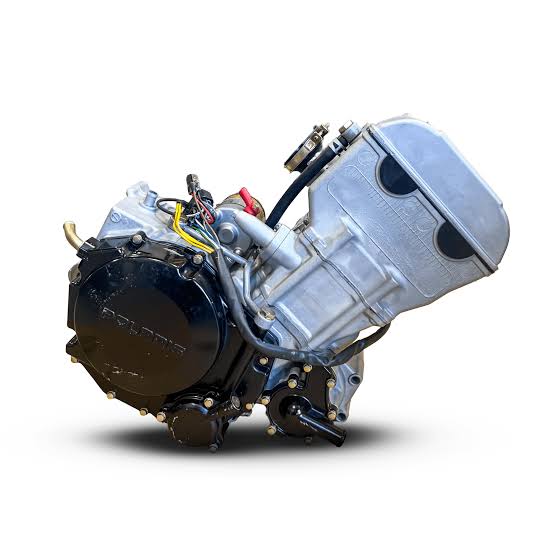
The modern off-road vehicle market demands extreme durability under harsh operational conditions, and the Polaris engine sits directly at the center of this engineering push. From the early days of relying on external manufacturing partners to bringing all powertrain design in-house under the ProStar banner, Polaris redefined how power, torque, and throttle response function across ATVs and UTVs.
Modern multi-cylinder architectures require careful maintenance to prevent early mechanical failures. Minor oversight in air filter seating allows ultra-fine dust into combustion chambers, scouring cylinder walls and destroying piston ring sealing in short order. Knowing how these engines breathe, oil, and cool makes the difference between hitting 20,000 miles and dropping $4,000 on an early top-end rebuild.
Polaris Engine Evolution & Manufacturing
Polaris did not always manufacture its own powertrains. For decades, the company relied heavily on Fuji Heavy Industries (Subaru) to build single-cylinder and twin-cylinder powerplants for its trail machines. That dynamic shifted dramatically as vehicle weights increased and performance demands spiked across side-by-side platforms.
[ Fuji Heavy Industries Era ] ---> [ In-House Engineering (1995) ] ---> [ ProStar Architecture Era ]
  (Subaru-sourced engines)         (Magnum 425 & Snow Twins)           (Integrated transmission/engine)
In 1995, internal engineering teams introduced dedicated Polaris-designed four-stroke engines. This shift laid the groundwork for the ProStar platform. By integrating transmission housings directly with engine crankcases, engineers eliminated heavy mounting brackets, reduced driveline flex, and maximized power transfer straight to the Continuously Variable Transmission (CVT) system.
Today, primary manufacturing takes place in Osceola, Wisconsin, and Monterrey, Mexico. Machining tolerances remain tight, utilizing high-pressure die-cast aluminum blocks, dual overhead camshafts (DOHC), and electronic fuel injection (EFI) tuned for immediate throttle response across varying ambient temperatures and elevations.
Polaris Engine Specifications Matrix
Understanding displacement, output, and fluid specs ensures your powertrain receives exact service care.
| Engine Model | Displacement | Valve Train | Output (HP) | Factory Oil Capacity | Primary Application |
| ProStar 570 | 567cc | DOHC Single | ~44 HP | 2.0 Quarts | Sportsman, RZR 570, Ranger 570 |
| ProStar 900 | 875cc | DOHC Twin | ~75 HP | 2.5 Quarts | Ranger XP 900, RZR 900 |
| ProStar 1000 | 999cc | DOHC Twin | ~110 HP | 2.5 Quarts | RZR XP 1000, Scrambler 1000 |
| ProStar S4 | 999cc | DOHC Inline-4 | ~125 HP | 3.5 Quarts | TITAN, Indy Snowmobiles |
| ProStar Turbo R | 999cc Turbo | DOHC Twin | ~181 HP | 2.5 Quarts | RZR Turbo R Platform |
| ProStar Gen 2 | 1997cc | DOHC Inline-4 | ~225 HP | 5.0 Quarts | RZR Pro R Platform |
Critical Wear Points & Diagnostic Troubleshooting
High engine hours, hard heat cycles, and severe off-road environments create predictable wear patterns. Identifying mechanical issues early prevents complete engine seizure or thrown connecting rods.
                     +---------------------------------------+
                     |    Symptom: Power Loss or Smoke       |
                     +---------------------------------------+
                                         |
                     +-------------------+-------------------+
                     |                                       |
          [ Blue Smoke / Low Comp ]               [ Rattling / Hard Start ]
                     |                                       |
          +----------v----------+                 +----------v----------+
          | Dust Ingestion /    |                 | Timing Chain /      |
          | Scoured Rings       |                 | Tensioner Slack     |
          +---------------------+                 +---------------------+
1. Dust Ingestion and Cylinder Wear
Dust ingestion is the leading cause of premature top-end failure in off-road engines. Fine silica particles bypass dry paper filters if the airbox seal degrades or if filters are reinstalled incorrectly.
- Symptoms:Heavy blue exhaust smoke, rapid oil consumption, hard starting when warm, and low cylinder compression.
- Correction: Measure cylinder bore taper with a dial bore gauge. If wear exceeds 0.002 inches, bore the cylinder oversize or install a new nickel-silicon carbide (Nikasil) plated cylinder block alongside fresh forged pistons.
2. Hydraulic Timing Chain Tensioner Failure
Stock hydraulic tensioners rely entirely on engine oil pressure to maintain chain tension. During cold starts or prolonged idling, oil pressure drop allows the timing chain to slap against guide rails.
- Symptoms: Sharp metallic rattling noise coming from the MAG (magneto) side of the cylinder head during cold start-ups.
- Correction: Replace the stock hydraulic tensioner with a mechanical, manual-adjust tensioner or an upgraded ratchet-style tensioner to preserve valve-to-piston clearance.
3. Oil Pressure Regulator Sticking
The internal bypass valve inside the oil pump assembly can stick due to fine metallic debris or varnish buildup.
- Symptoms: Spikes in oil pressure that blow out the PTO (Power Take-Off) crank seal, resulting in severe oil leaks behind the primary clutch.
- Correction: Remove the oil pump cover, polish the bypass plunger bore with micro-abrasive pads, and verify spring free length matches factory service manuals.
Preventative Service & Fluid Schedules
Routine maintenance schedules must adapt to riding conditions. Extended high-RPM operation in mud or dunes requires half the standard service interval.
+------------------+------------------+------------------+------------------+
|   Every 25 Hrs   |   Every 50 Hrs   |  Every 100 Hrs   |  Every 200 Hrs   |
|                  |                  |                  |                  |
|  * Clean Air     |  * Change Engine |  * Inspect Valve |  * Replace Spark |
|    Filter Box    |    Oil & Filter  |    Clearances    |    Plugs         |
|  * Inspect CVT   |  * Check Spark   |  * Service CVT   |  * Flush Engine  |
|    Belt Ducting  |    Arrestor      |    Clutches      |    Coolant       |
+------------------+------------------+------------------+------------------+
- Engine Oil & Filter Service: Always run full-synthetic 5W-50 or 10W-50 oil formulated with high zinc (ZDDP) levels to protect flat-tappet valve trains and heavily loaded crank journals.
- Cooling System Flushing: Drain and flush ethylene-glycol coolant every 100 hours or two years. Air pockets lock up Polaris cooling loops easily; always elevate the front end of the vehicle when bleeding air through the cylinder head bleed screw.
- Valve Clearance Inspections: Shim-under-bucket valve setups tighten up over time as valve seats wear into the head. Check clearances with feeler gauges every 100 hours to prevent burnt exhaust valves.
Polaris Engine Performance Upgrades
Unlocking reliable horsepower from a Polaris engine requires addressing airflow restrictions and thermal management together.
[ ECU Reflash ] ---> Lower Fan Activation Temps & Optimize AFR
        |
[ High-Flow Intake ] ---> Increased CFM Airflow
        |
[ Clutch Kit ] ---> Correct Belt Tension & Peak RPM Shift Phase
- ECU Tuning: Stock ECU maps run lean to pass emissions testing, driving up exhaust gas temperatures (EGT). A custom ECU tune richens the air-fuel ratio under boost/heavy load and commands radiator fans to kick on at 185°F instead of 205°F.
- Clutch Calibration: Horsepower means nothing if your CVT clutch cannot hold the engine at its peak powerband RPM. Upgraded primary clutch springs and adjustable flyweights stop belt slip and lower engine operating temperatures.
- High-Compression Pistons: For non-turbo engines, switching to forged high-compression pistons increases throttle response and low-end torque. Ensure you run 91+ octane pump fuel to prevent detonation.
Frequently Asked Questions (PAA Sourced)
When was the first Polaris XPEDITION made?
The Polaris XPEDITION was first introduced in Summer 2023 for the 2024 model year.It launched featuring two primary configurations: the XPEDITION ADV and XPEDITION XP.Both models utilize a high-output ProStar engine designed to provide strong mid-range power and reliable performance across long-distance, multi-day off-road adventures.
What kind of off-road vehicle is Polaris XPEDITION?
The Polaris XPEDITION is an adventure-focused side-by-side off-road vehicle designed for long-distance trail exploration.It features an integrated cab, high-payload cargo space, and a heavy-duty Polaris engine.Built to blend work utility with long-travel trail suspension, it offers all-weather comfort alongside heavy payload capacity.
Is it legal to drive a Polaris XPEDITION on the road?
Street legality for a Polaris XPEDITION depends entirely on state and local municipal laws. While Polaris builds the vehicle strictly for off-road use, many jurisdictions allow operation on public roads if you install street-legal kits.These upgrades typically require turn signals, mirrors, a horn, license plate brackets, and specific road-approved tires.
What is the difference between a Polaris XPEDITION XP and Polaris XPEDITION ADV?
The key difference between the XPEDITION XP and ADV lies in their cargo box designs and rear seating layouts.The XP model features a standard dumping cargo box with a split flip-up rear seat setup.The ADV model features a fully enclosed, covered rear cargo area with pass-through capability and fold-flat rear seats for maximum interior storage.
Why do Polaris XPEDITION NorthStar Editions cost more?
The NorthStar Edition commands a higher price because it includes a fully enclosed climate-controlled cab straight from the factory.It features integrated heating, automotive-style air conditioning, power windows, and a sealed cabin system.These premium creature comforts keep passengers clean and comfortable in extreme heat, cold, or dust.
What’s the difference between Polaris XPEDITION and Polaris GENERAL?
The Polaris GENERAL functions as a crossover side-by-side balancing trail sport riding with light utility work.The XPEDITION focuses on extended overland trips, offering sealed cab options, modular rack systems, higher electrical charging output, and specialized cargo configurations designed for heavy gear transportation.
Regular maintenance, clean air intake sealing, and correct oil service keep your Polaris engine running at peak efficiency for years of hard riding. Inspect your intake system today to protect your powertrain investments.
